

The 2025 Sedona Forum, held May 2-3, 2025, celebrated the legacy of Senator John McCain and emphasized how the United States can leverage its economic strength, technological edge, military might, and cultural influence to lead with purpose in a rapidly changing world. With the theme, “Wielding America’s Preeminent Power,” heads of state, policymakers, academics, and practitioners shared insights and offered bold ideas on how to harness American exceptionalism in an era of great power competition. The McCain Institute hosted U.S. Senators Ruben Gallego (D-Ariz.), Mark Kelly (D-Ariz.), Amy Klobuchar (D-Minn.), James Lankford (R-Okla.), Cynthia Lummis (R-Wyo.), and Sheldon Whitehouse (D-R.I.), U.S. Representatives Jason Crow (D-Colo.-06), Craig Goldman (R-Texas-12), and Seth Moulton (D-Mass.-06), U.S. Indo-Pacific Commander Admiral Samuel Paparo, and more than 50 other policy experts, business leaders, and insightful voices. Journalists from The Washington Post, the Sedona Forum’s exclusive media partner, moderated panels, as well as reporters from NBC News, CBS News, The Atlantic, Gray TV, and the Financial Times. Discussions ranged from U.S.-Ukraine relations, the geopolitics of trade and energy, and the state of democracy around the globe.
from around the world
represented among speakers
There was no other U.S. statesman who advocated for Ukraine more than Senator John McCain. In 2014, as Russia began its takeover of Crimea, Senator McCain declared, “We are all Ukrainians,” as he urged America and the world to oppose Vladimir Putin’s theft of land from a sovereign Ukraine. Senator McCain believed a free and democratic Ukraine would be a bulwark against Putin’s authoritarian regime in Russia and something that emerging states around the world could aspire to. As a senator, he rallied with protesting Ukrainians in Kyiv and constantly pressed his colleagues in Washington to support the Ukrainian people against Russian aggression economically and militarily. With Ukraine still under attack by Vladimir Putin and Russia – we are driven by Senator McCain’s desire for freedom and democracy to support Ukrainians in defense of their homeland. The people of Ukraine are standing up for a cause greater than themselves – the cause of freedom, epitomizing what it means to defend democracy.
Vladimir Putin wants to restore the old Russian empire. He cannot stand a free, democratic, prosperous Ukraine, because sooner or later, the people of Russia would want to have that kind of lifestyle as well.
Senator John McCain, 2014 Tweet
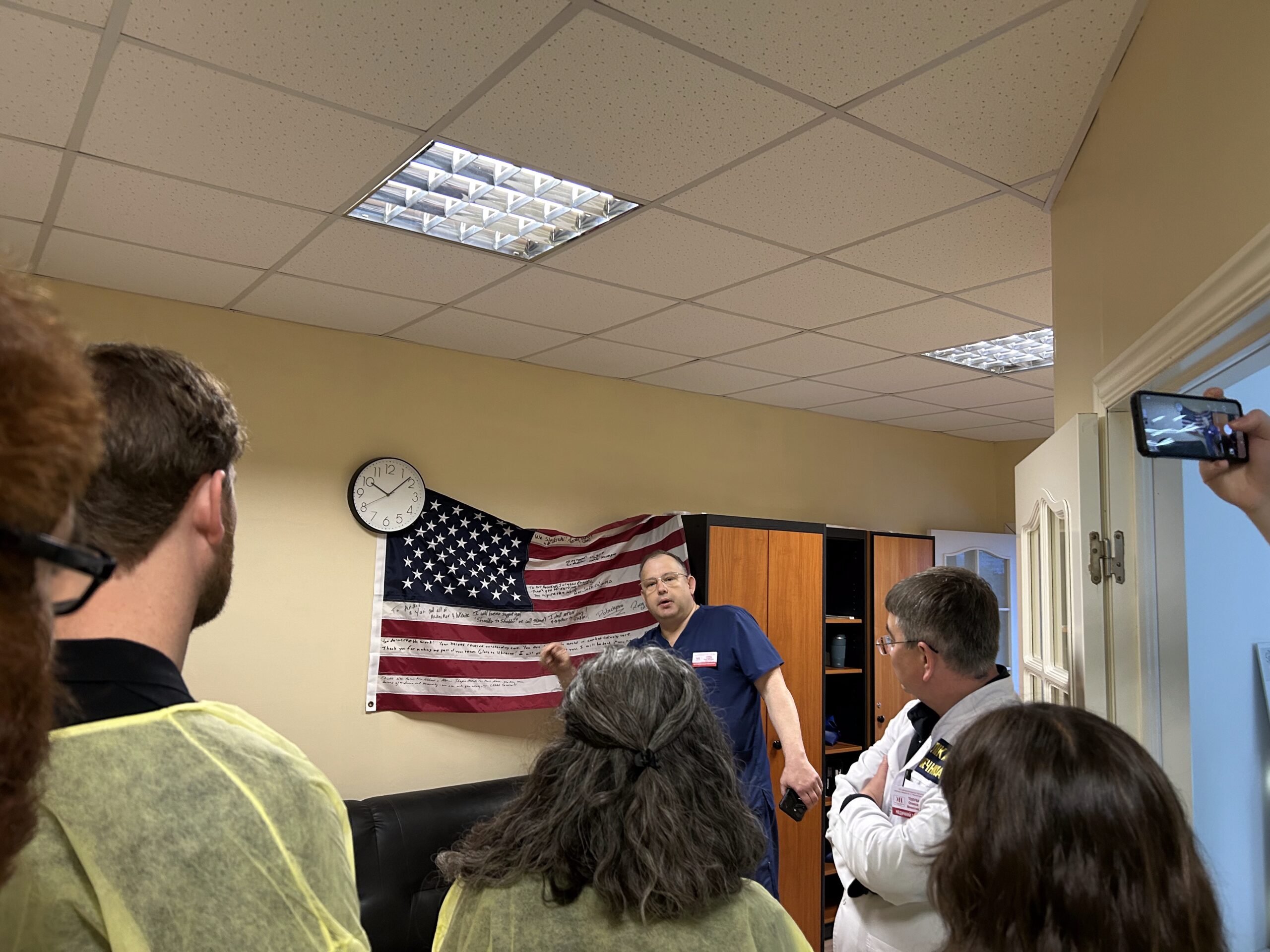
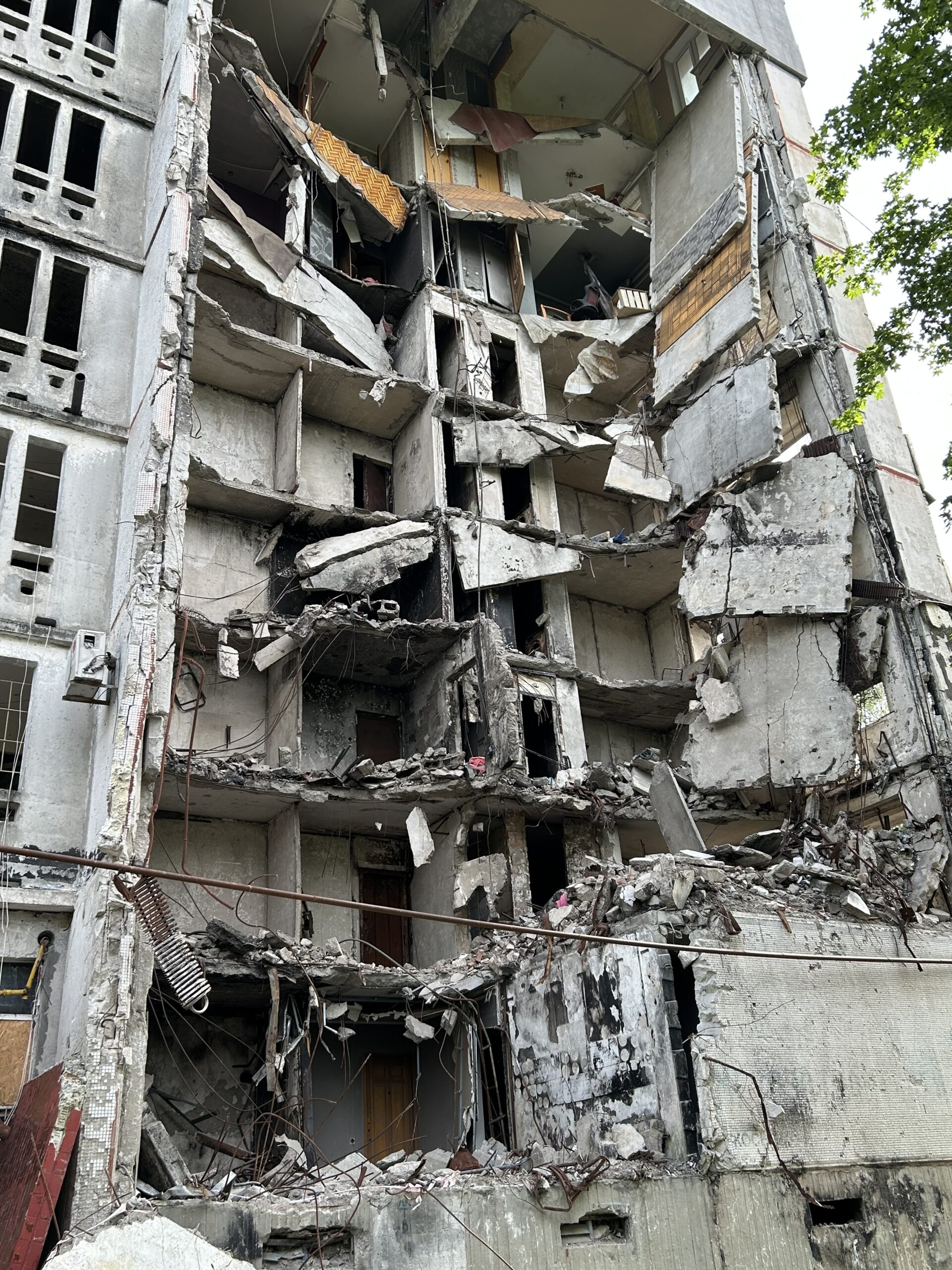
The McCain Institute led a bipartisan delegation of Congressional staffers to Ukraine where they visited Kyiv, Bucha, Kharkiv, and Dnipro to meet with policymakers, religious leaders, civil society representatives, and citizens to gain a deeper understanding of conditions in Ukraine more than three years after Russia’s full scale invasion, and to discuss securing Ukraine a just and lasting peace.
“Children have been the greatest victims of Russia’s ungodly war. We walked past several schools in Kharkiv, including a kindergarten, that had been intentionally bombed into rubble by Russia. We visited an underground school where children must study in bunkers with no daylight because it is not safe for them above ground. The 20,000 Ukrainian children whom Russia stole must be returned,” said McCain Institute Senior Director for Global Democracy Programs Laura Thornton.
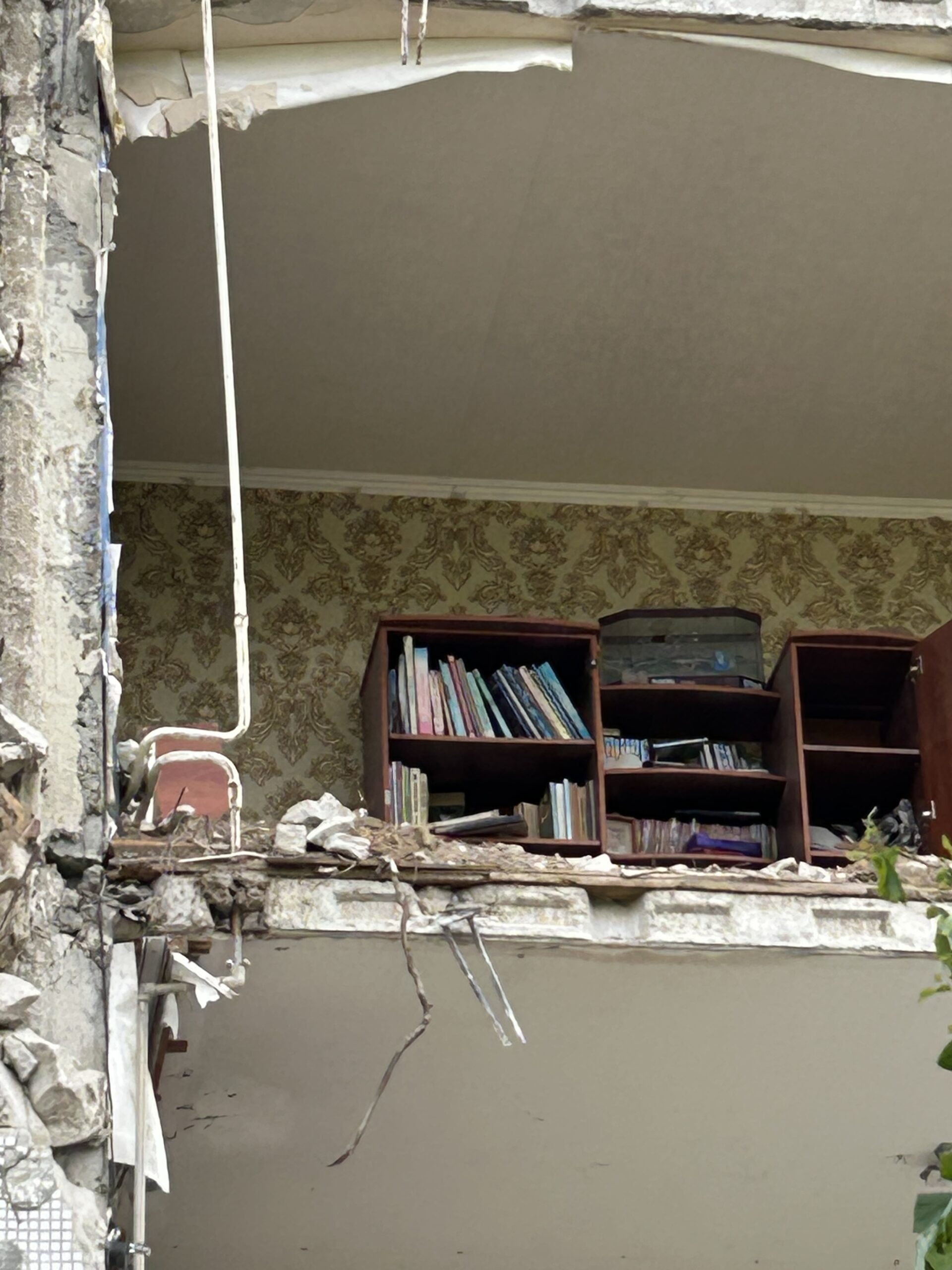
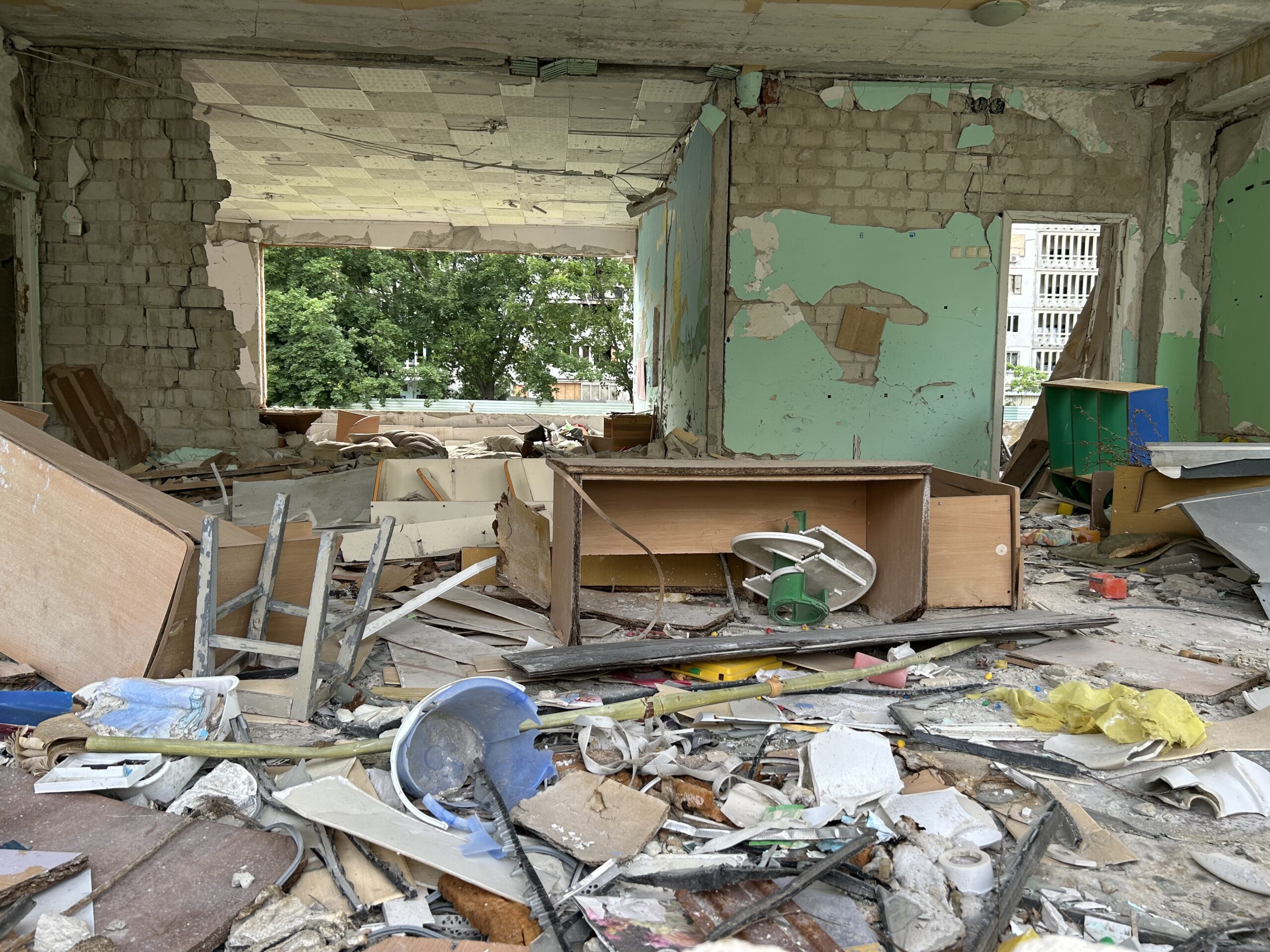
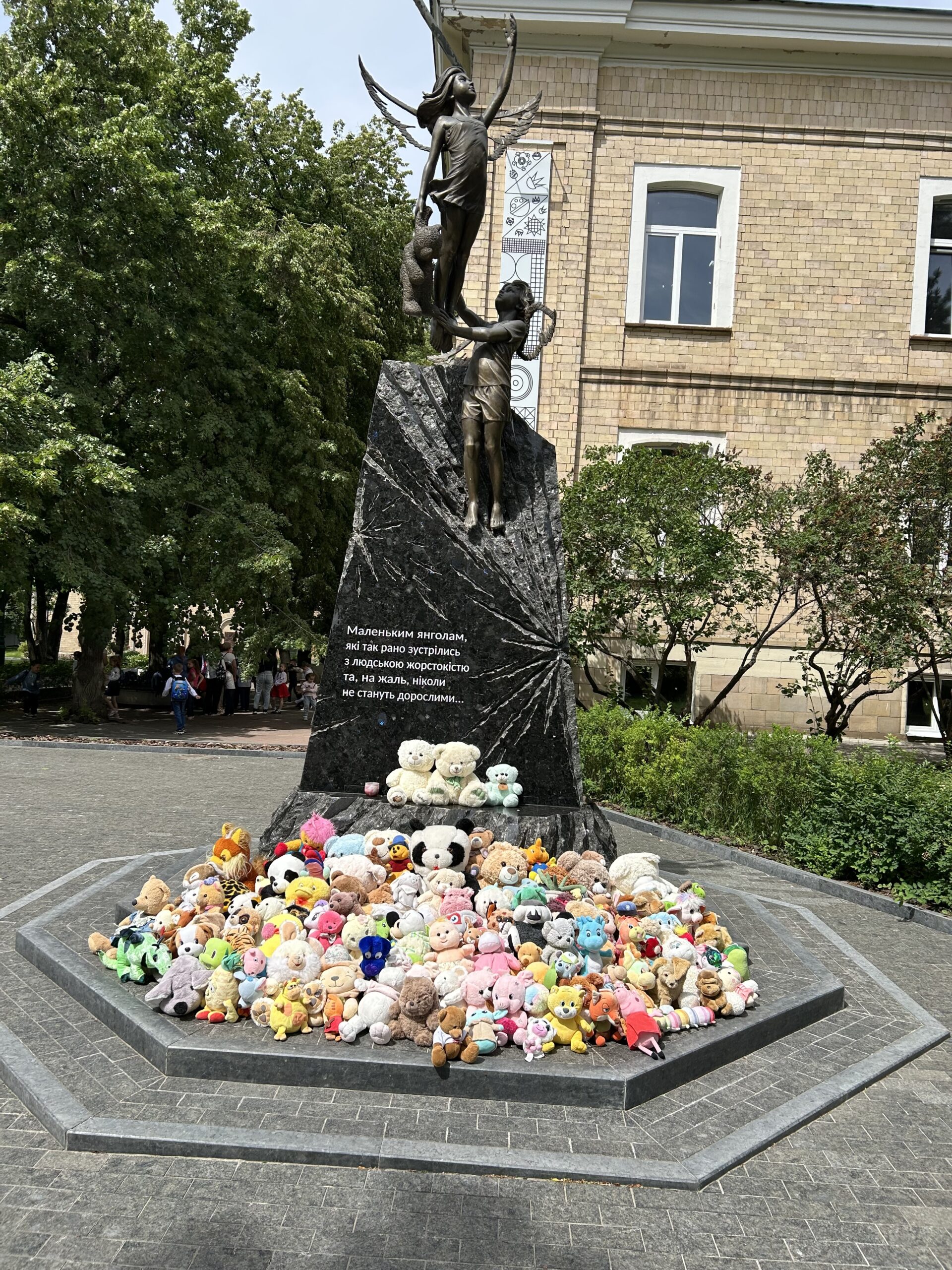
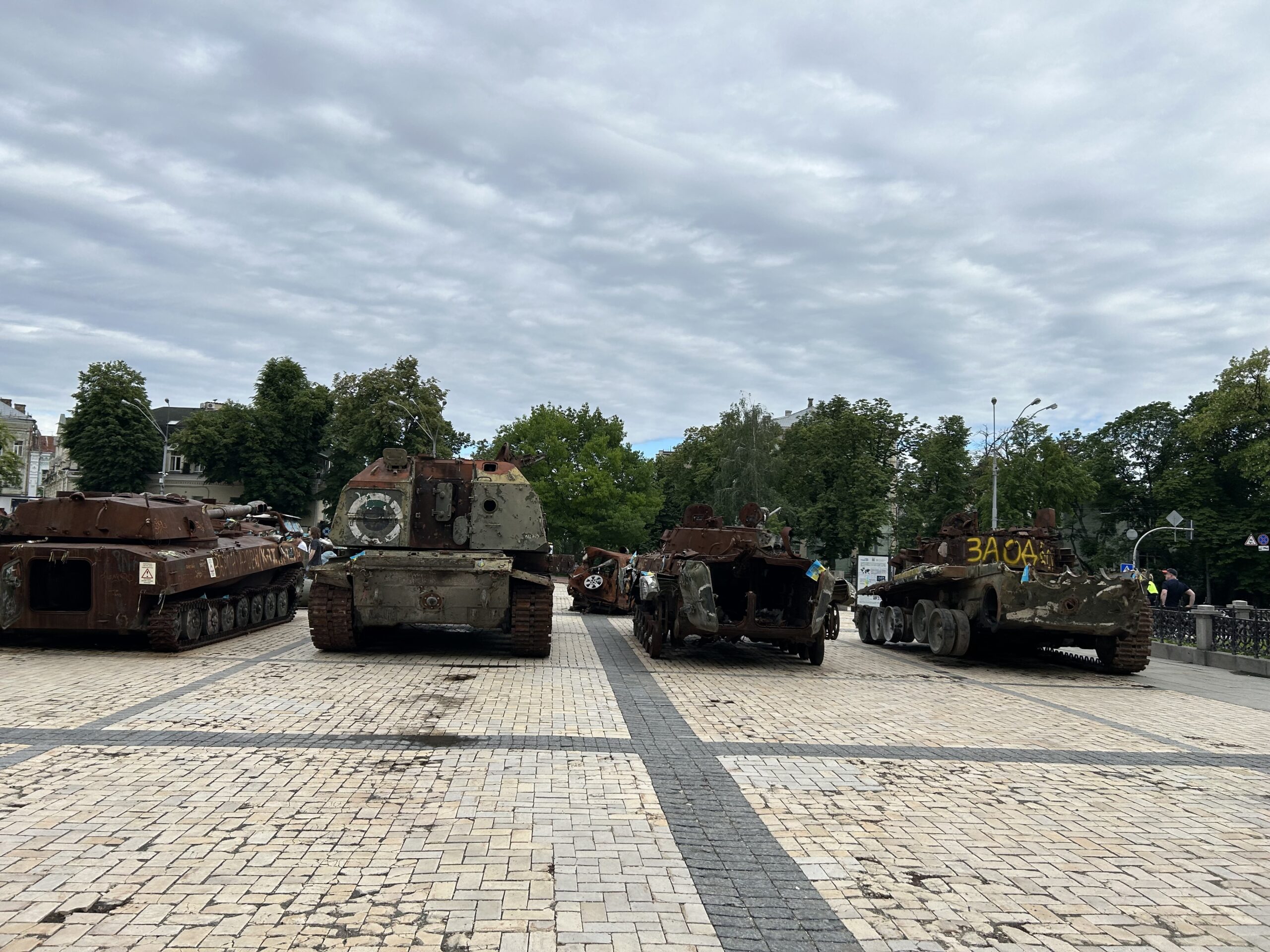
Senator McCain was dedicated to the people of Ukraine and their determination to live in a free and democratic society. Having visited Ukraine three times in the last year, I am proud to carry the torch and stand in solidarity with the Ukrainian people. This latest trip underscored the importance of Ukraine joining NATO and the EU in order to defeat Vladimir Putin and the spread of authoritarianism around the globe. This should be the urgent priority of the outgoing Biden administration and the incoming Trump administration.
McCain Institute Executive Director Dr. Evelyn N. Farkas
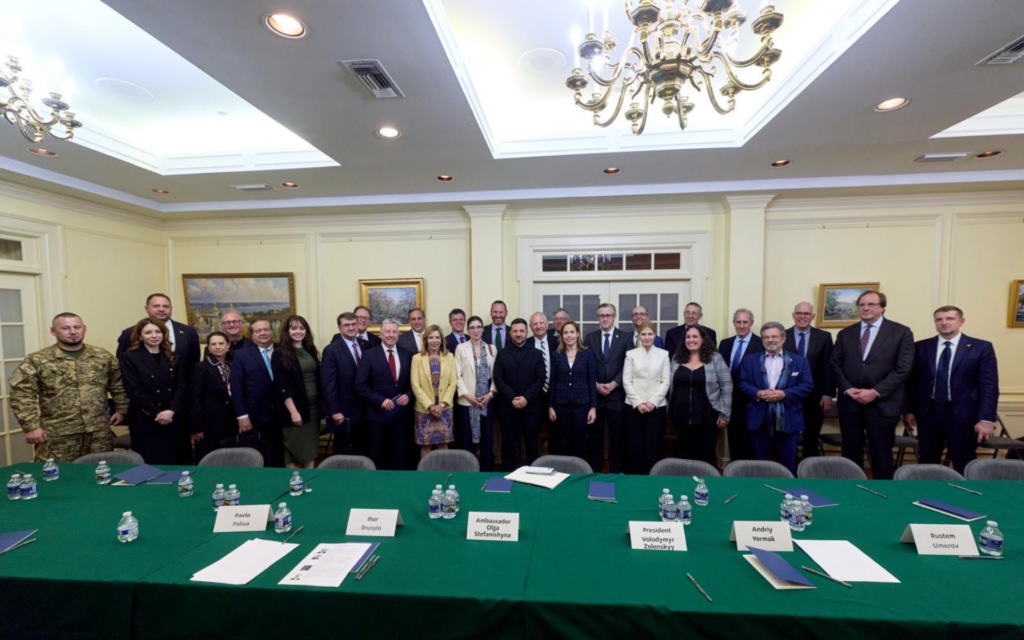
McCain Institute Executive Director Dr. Evelyn Farkas met with Ukraine President Volodymyr Zelenskyy(Open Link in new window) alongside the heads of other American think tanks to discuss the ongoing war and Ukraine’s defense industry.
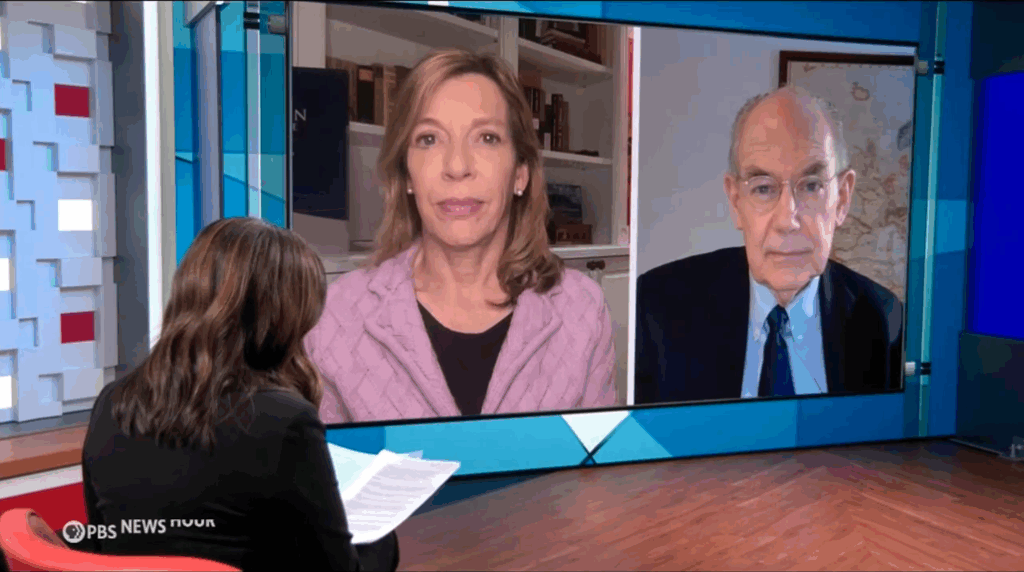
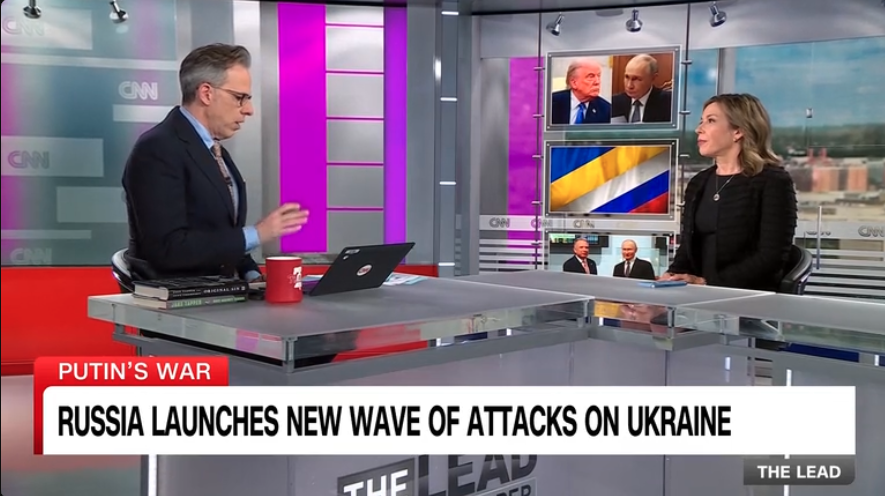
McCain Institute Senior Director of Global Democracy Programs Laura Thornton dispels disinformation being circulated about Ukraine and outlines steps the U.S. can take in supporting Ukraine’s fight for democracy following a recent McCain Institute-led bipartisan mission to Ukraine.
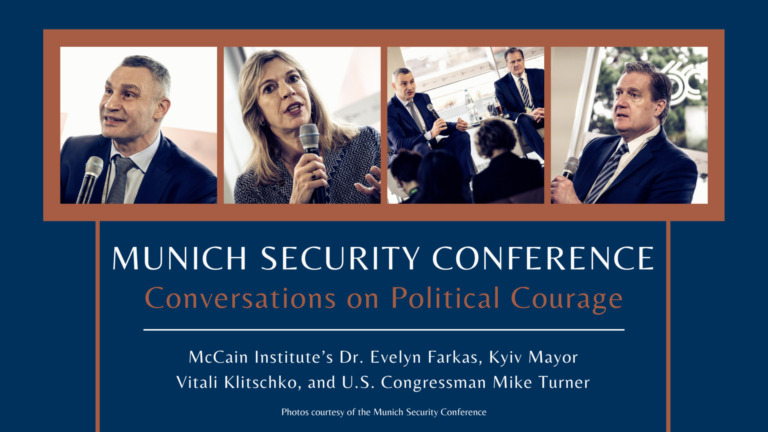
McCain Institute Executive Director Dr. Evelyn Farkas moderated a panel at the Munich Security Conference, highlighting the importance of political courage and its role in shaping current global politics with U.S. Representative Mike Turner (OH-10) and Kyiv Mayor Vitali Klitschko.
The panelists reflected on how their shared experiences as mayors of Kyiv, Ukraine, and Dayton, Ohio, taught them the interconnectedness of community building, political courage, and democracy. The group also discussed how political courage is fundamentally derived from citizen-level public discourse, resulting in a political discourse that can culminate in democratic political action. Other topics included the situation in Ukraine, how it will affect great power competition, and the importance of continued U.S. and Western support.
There has never been a more important time to advocate for democracy, in the United States and around the world. Our program continues to bring democracy and human rights to the forefront of conversations in Washington, D.C., and protect activists around the world.
The Human Rights Defenders (HRD) Program continued its work to strengthen democratic resilience at home and abroad by protecting those who defend human dignity and free societies. The HRD Program remained a critical source of support in a year marked by heightened global repression and the near collapse of the defender assistance ecosystem. As other organizations reduced or closed their direct support programming, the McCain Institute became one of the only U.S.-based institutions continuing to provide individualized, transitional assistance to activists facing targeted threats. This year, we supported 225+ defenders from 75+ countries in emergency relief, relocation assistance, legal and medical support, or continued capacity to safely carry out their work. Each case represents a person choosing democracy and human rights over fear – and our commitment to them reflects our belief that the defense of freedom must be lived, practiced, and protected person by person.

Truth Hounds received 30k from the McCain Alumni Club in 2022 for this organization’s work.
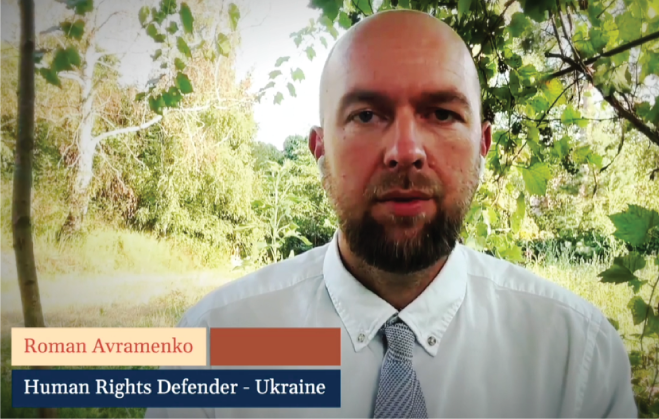
Ukraine
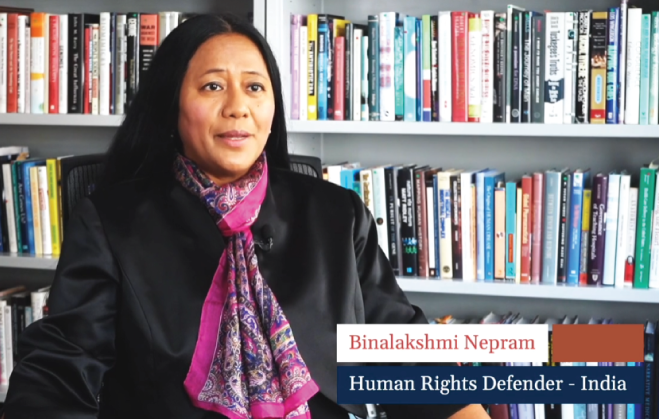
India
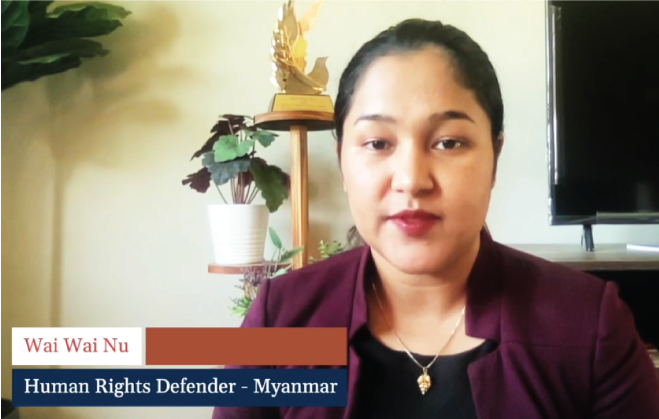
Myanmar
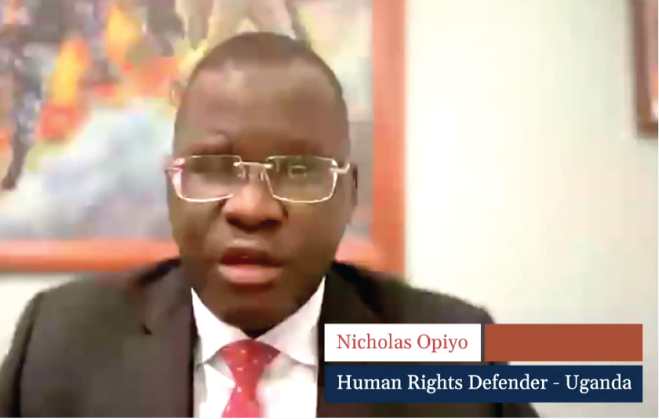
Uganda
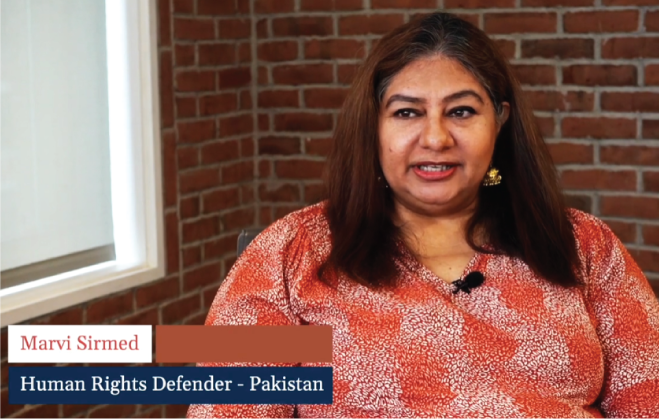
Pakistan
Launched in February 2025, The John McCain Freedom for Political Prisoners Initiative (FPPI) provides vital support to Americans and green card holders who are held overseas as political prisoners or hostages, as well as dissidents, political prisoners, and hostages from other nations who are held around the world by repressive regimes. Inspired by Senator John McCain, a vocal and passionate advocate for those wrongfully held for fighting against tyranny, and his experience as a prisoner of war for over five years, FPPI provides critical support to individual prisoners and their families.
With the support of a $500,000 grant from the Carnegie Corporation of New York, FPPI helped secure the release of Edan Alexander, a citizen of the United States and Israel, who was captured by Hamas on October 7, 2023, and Maria Kalesnikava, a Belarusian flutist and activist.
Today, the work continues to free Jesús Armas, Mzia Amaghlobeli, Jimmy Lai, Alexei Gorinov, and Ahmadreza Djalali from unjust detention.
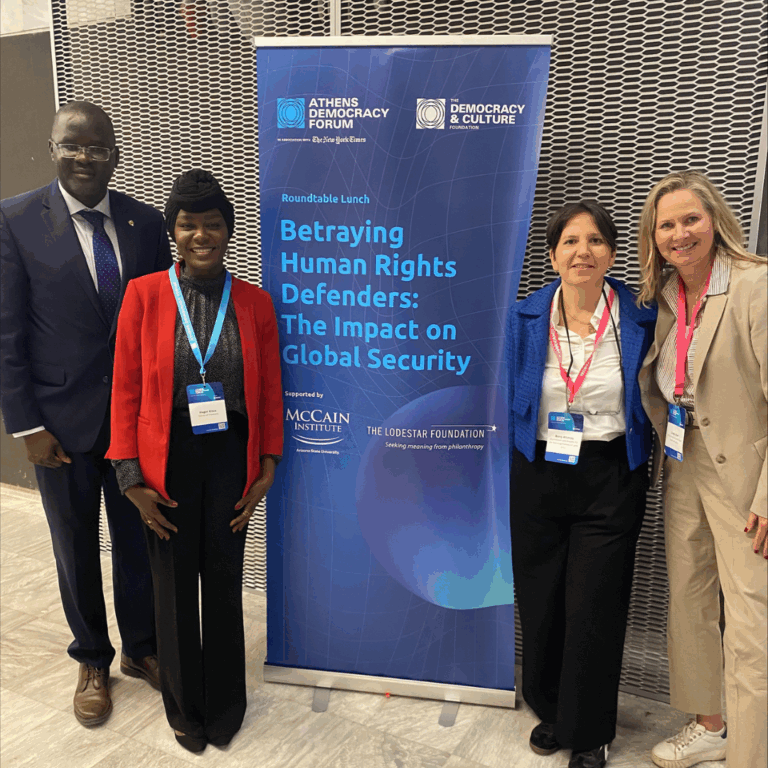
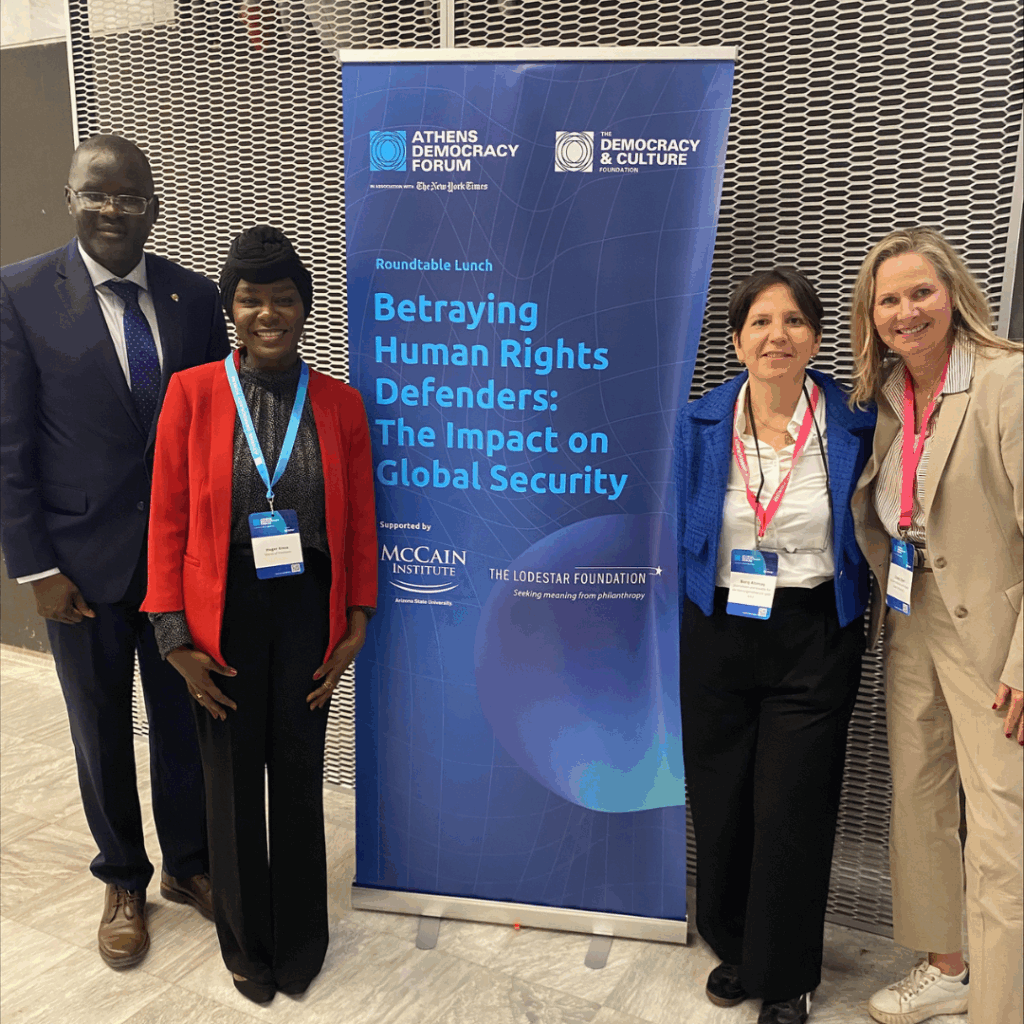
The McCain Institute hosted a panel at the Athens Democracy Forum—one of the world’s premier gatherings focused on the future of democratic governance. The panel, “Betraying Human Rights Defenders: The Impact on Global Security,” was moderated by the McCain Institute’s Ambassador Cindy Dyer and featured Barış Altıntaş, Hager Eissa, Nicholas Opiyo, as they discussed the growing risks they face and the consequences of withdrawing international support.
Through workshops for civic actors, activists, and independent journalists from frontline democracies share best practices and lessons learned in defending democracy against rising authoritarianism.
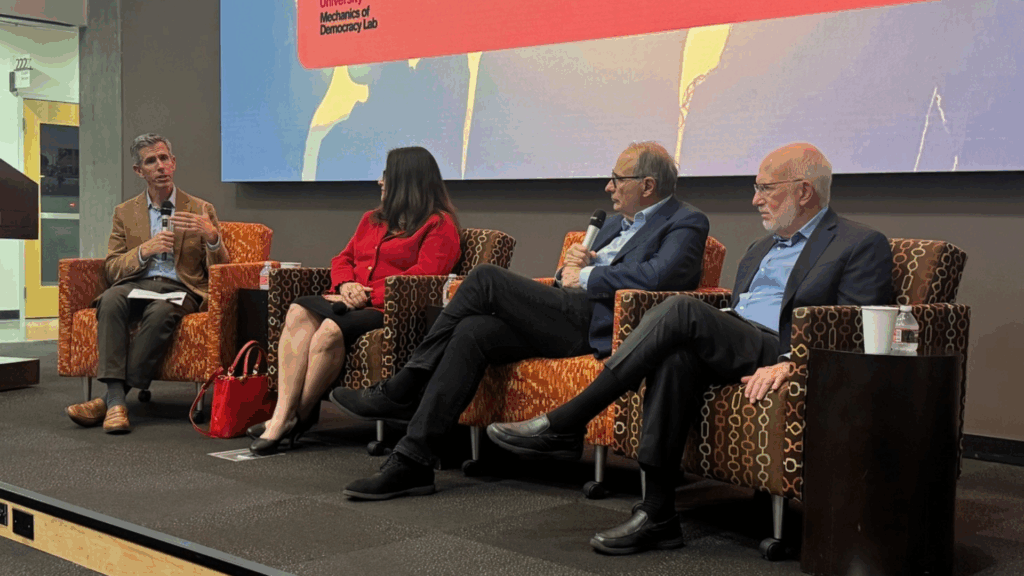
In collaboration with Arizona State University’s Mechanics of Democracy Lab, the American Democracy program co-hosted a two-day AI + Elections Clinic designed to equip election officials, media partners, and civic leaders with tools to navigate emerging threats – including AI-generated mis- and disinformation, increasing security pressures, and persistent public skepticism.
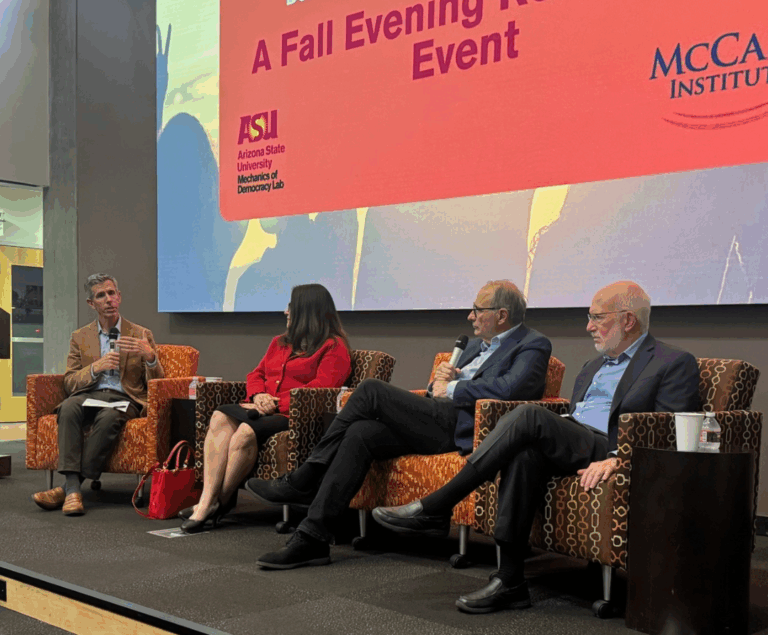
We protect and advance individual human rights and freedom around the world by working with American policymakers and other strategic partners to spur bold action to prevent violations from occurring and to hold perpetrators accountable.
Coinciding with International Religious Freedom Day on October 27, the Human Rights & Freedom (HRF) Program released a report titled, “The State of Religious Freedom Worldwide: An Inside Look at the Axis of Upheaval’s Religious Persecution and How the U.S. Can Counteract It.” Alexis Mrachek, Senior Program Manager of the HRF Program, led the effort on the report, and co-edited it with Knox Thames, Director of Pepperdine University’s Program on Global Faith and Inclusive Societies.
Senator John McCain repeatedly expressed his belief that religious freedom is essential. In 2008, at Oakland University in Michigan, he declared, “No society that denies religious freedom can ever rightly claim to be good in some other way. And no person can ever be true to any faith that believes in the dignity of all human life if they do not act out of concern for those whose dignity is assailed because of their faith.” Those words ring true now more than ever. As societies around the world become less free, religious freedom is under global assault, which is also being increasingly coordinated among autocrats, who share their playbooks.
Concerned about this reality, the HRF Program convened top regional and functional experts to provide their analysis of international religious freedom in China, Russia, Iran, and North Korea – also known as the Axis of Upheaval. The report presents assessments of religious persecution by the hands of China, Russia, Iran, and North Korea, drawing on existing research and publicly available data, and draws conclusions regarding how the United States government should respond.
The authors represent leading voices from the foreign policy and human rights community, from different backgrounds, faiths, and politics. In addition to presenting the facts of the Axis of Upheaval’s religious persecution, they make a compelling case for robust U.S. leadership as key to countering these threats, safeguarding and promoting international religious freedom, and protecting human rights and dignity.
The following authors contributed to the report:
In mid-November, McCain Institute Human Rights & Freedom Senior Program Manager Alexis Mrachek and Hudson Institute Senior Fellow Olivia Enos co-authored a policy paper making the case for Radio Free Europe/Radio Liberty and Radio Free Asia, to ensure information access for closed societies. The paper’s argument corresponds with an executive order issued by the Trump administration in March 2025 aimed at closing the United States Agency for Global Media (USAGM), which may lead to the closure of USAGM grantees Radio Free Europe/Radio Liberty (RFE/RL) and Radio Free Asia (RFA).
Despite their names, RFE/RL and RFA are so much more than radio. They do provide radio broadcasts to countries with strict information control, but they also offer critical on-the-ground reporting that informs the American public and provides a voice to those persecuted by authoritarian governments in Europe, Central Asia, the Middle East, and the Indo-Pacific. Both serve strategic functions that advance U.S. interests by conveying the truth about the value of freedom and human rights. The information they provide produces goodwill toward the United States in authoritarian countries that seek to sow discord with America and to deceive their populations about the importance of freedom.
In their paper, Alexis and Olivia assert that if the United States government shuts down RFE/RL and RFA, authoritarian states will fill the void with propaganda and that they are in fact already doing so. They claim it would be a mistake to give up this strategic advantage precisely at a time when China, Russia, Iran, and North Korea are ramping up threats against the United States, and that without RFE/RL and RFA, the U.S. will be less well-equipped to fight and win in the information space, make strategic policy decisions in regions of importance, and provide support to persecuted people.
In an op-ed published by the Washington Examiner in late November, McCain Institute human rights and democracy experts Alexis Mrachek and Pedro Pizano warned about escalating threats to religious freedom and sounded the alarm over the Chinese Communist Party’s recent arrest of members of Zion Church, including Pastor Ezra Jin. They argued that the U.S. should use all available diplomatic and economic levers against Beijing to demand their release, because the sooner China releases these Christians, the better it will be for international religious freedom and U.S. national security.

Committed to continuing Senator McCain’s legacy of character-driven leadership, the McCain Institute empowers individuals around the world to educate others in the McCain Institute’s leadership curriculum.

In its fourth year, the McCain Global Leaders program has grown in both impact and recognition. The 2025 application saw 2400 individuals from 138 countries apply to join the program. 22 individuals from 19 countries were selected for the 2025 cohort which runs from June 2025to March 2026. To date, the program has worked with 160 Leaders across 90 countries and conducted in-person programming in 10 countries.
2022 Alumnus, Tomas Martinaitis of Lithuania, decided to run for national-level office upon completion of the program. Today he is serving his country as a Member of Parliament and has attributed his leadership development gained during the program to his ability and confidence to serve his fellow citizens and lead the country.
2022 Alumnus, Angeline Makore of Zimbabwe, took a technical skills development module on fundraising and grant writing and put it to use to secure long-term funding for her organization Spark R.E.A.D. This has enabled her to provide life-changing support to women and girls who have suffered from gender and sexual based violence.
During the 2025 earthquake which devastated Myanmar, 2019 Alumnus Zaw Tu Hkawng collaborated with 2022 Alumnus Dr. James Gough to work together to deliver lifesaving medical equipment and personnel to regions most affected by the earthquake.
Over the span of six interactive, virtual modules and one week of in-person modules in Annapolis, MD at the United States Naval Academy and in Washington, DC, the leaders participated in a curriculum focused on character-driven leadership. The McCain Global Leaders leadership curriculum aims to support solving the issues faced by global leaders, enabling them to sustainably embark on their impact journeys, while also equipping them with tools to work effectively. The curriculum is a holistic approach to developing leaders that work at the mindset level (leading self), the skill level (leading others), and the strategic thinking level (leading change) that will support emerging leaders in reaching their social change objectives. The curriculum allowed leaders to engage each other directly as well as parallel their own leadership journey with Senator John S. McCain.
Leaders from the 2024 Asia and Oceania cohort gathered in Taipei, Taiwan for a regional study tour to learn from the resilience of Taiwan’s democracy. The leaders visited and met with member of parliament, Hon. Puma Shen, the Ministry of Foreign Affairs, the National Security Council, and the Legislative Yuan. The leaders also met with various civil society organizations working in the defense of democracy, human rights, and freedom in Taiwan such as the Taiwan Foundation for Women’s Rights, Kuma Academy, Central News Agency, the Taiwan Association for Human Rights, and more. The study tour was conducted in partnership with the Taiwan Foundation for Democracy and the International Republican Institute.
The Africa and Middle East cohort visited Nairobi, Kenya to develop a better understanding of Kenya’s democracy and their approach to human rights and freedom. The delegation met with Kenya’s National Security Advisor to the President, Ambassador Monica Juma, the State Department for Micro, Small, and Medium Enterprise Development, the Young Parliamentarians Association, the Women’s Parliamentary Association and more. The leaders also visited a local artist initiative, Masai Mbili Arist Collective, located in the neighborhood of Kibera to learn about their youth programs that focus on providing opportunities for members of the community to express themselves through a creative outlet.
The Western Hemisphere cohort traveled to Buenos Aires, Argentina to learn from the Argentinian experience as it relates to democracy, human rights and freedom from both a historical and current perspective. Leaders engaged with both the government and civil society sector through meetings with the Ministry of Justice, the Government of the city of Buenos Aires, Congresswoman Florencia de Seni, the Women’s Democracy Network, and Aalianza por Venezuela. The leaders also participated in cultural learning experiences such as a visit to the Argentine National Congress, El Parque de la Memoria, and the historic immigrant neighborhood of La Boca.
The 2024 McCain Global Leaders Cohort convened in Vietnam for the capstone Legacy Experience. As the leaders concluded their year as McCain Global Leaders, they reflected on their own leadership journeys, the life, leadership, and legacy of Senator John McCain, and U.S. – Vietnam relations through the themes of peace and reconciliation. The delegation also consisted of Global Advisory Council Members; Hon. Abby Finkenauer, Kelvin Beachum, Djordje Todorovic, and Leon Toh, and three alumni; Esther Akafia from Ghana, Rosie Gomez from the US, and Zaw Tu Hkawng from Myanmar. The Legacy Experience consisted of impactful meetings with Amb. Cindy McCain, U.S. Ambassador to Vietnam Marc Knapper, Global Advisory Council Member Virginia Foote, and U.S. Veteran Chuck Searcy and service-learning opportunities with the Da Nang Association of Victims of Agent Orange and the Da Nang Soup Kitchen. The delegation also engaged in cultural learning sessions through their visits to the War Remnants Museum, Reunification Palace, Cu Chi Tunnels, Mekong Delta, ancient city of Hoi An. A few memorable moments during the Legacy Experience include a Youth Roundtable at the US Embassy Hanoi and an afternoon spent with the Da Nang Association for Victims of Agent Orange (DAVA).
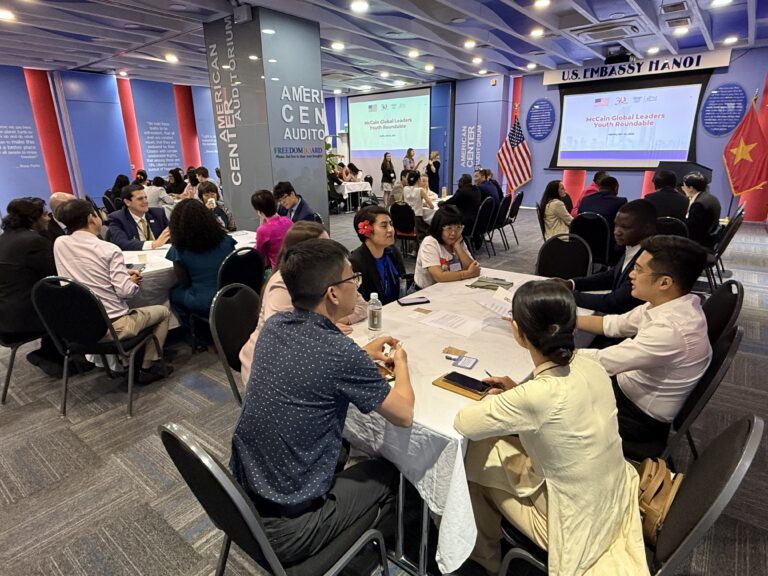
The United States Embassy in Hanoi hosted the 2024 cohort of McCain Global Leaders for a day of engagement, learning, and dialogue. The agenda included a ceremonial wreath laying ceremony at the McCain Memorial on Truc Bach Lake with Amb. Marc Knapper, a briefing on U.S. – Vietnam relations at the American Center, a youth roundtable, and a reception at the Ambassador’s residence. A notable engagement was the Youth Roundtable discussions. The leaders engaged in open dialogue with young Vietnamese leaders discussing topics ranging from cultural differences to media and freedom of the press. The roundtables encouraged meaningful exchanges, mutual learning, and cross-cultural connections.
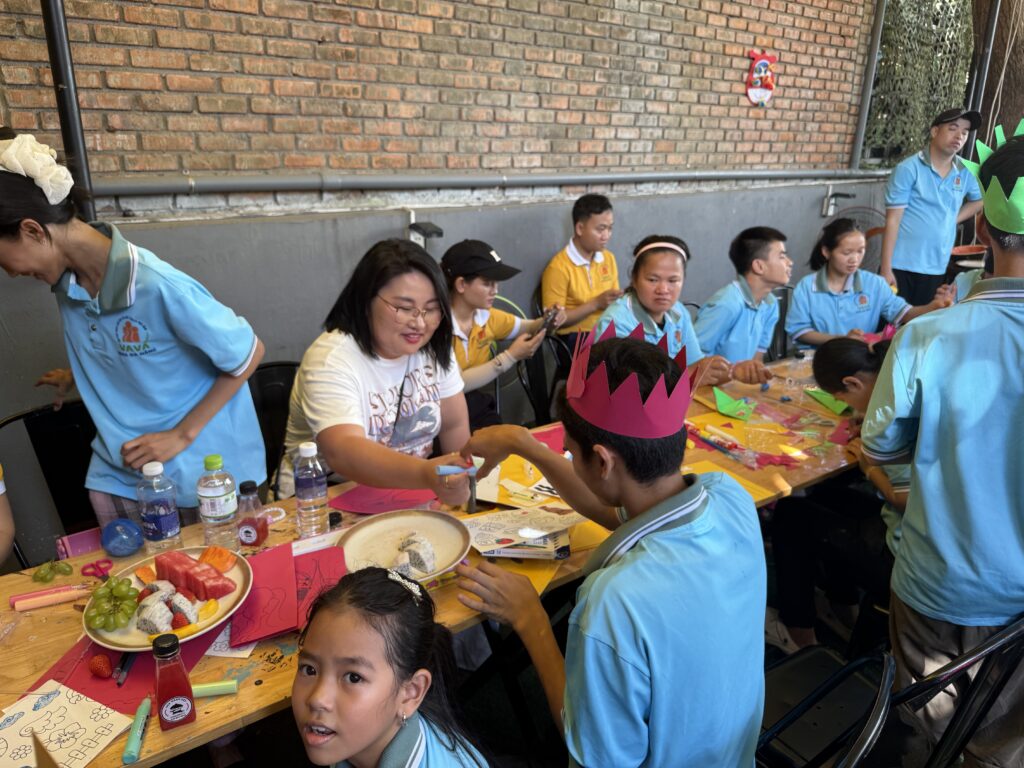
In partnership with the Da Nang Association for Victims of Agent Orange (DAVA), the leaders took part in a service opportunity through engaging with the children of victims of Agent Orange. Before the service opportunity, the leaders learned about the history and lasting impacts of Agent Orange during their visit to the War Remnants Museum in Ho Chi Minh City. During the visit, the delegation spent time with the children through fun and engaging activities such as making crafts, playing games, singing, and dancing. This opportunity provided an afternoon of fun for the children and leaders and also served as a sobering reminder of the impacts of war and conflict.
The 2025 McCain Global Leaders cohort completed a six-module Leadership Curriculum designed to strengthen leadership skills and equip participants with practical tools to advance their work in the advancement of democracy and human rights. This year’s curriculum introduced updated content on adaptive leadership and the legacy of Senator John McCain, alongside new opportunities for alumni engagement. The program achieved a 4.7 out of 5 satisfaction rating, with 90% of leaders reporting that it met or exceeded their expectations. Participants noted significant gains in leadership confidence and content knowledge, particularly in resilience, motivational theory, and adaptive leadership. MGLs emphasized the value of reflective learning, peer exchange, and collaborative discussion, which enabled them to better navigate challenges such as balancing personal values with institutional priorities, fostering inclusion, and leading amid complexity. The curriculum continued to underscore the Institute’s commitment to developing character-driven leaders grounded in courage, integrity, and service.
The McCain Global Leaders Leadership Experience brought together the 2025 Cohort for a week of discussions focused on democracy and governance in the United States, the legacy of Senator McCain in Washington, D.C., and the importance of ethical and character-driven leadership. The experience featured conversations on topics such as ethical leadership, freedom of the press, equality, the resilience of democratic institutions. MGLs explored these themes with distinguished speakers and experts including Senator Mark Kelly, CNN’s Van Jones, CBS News’ Major Garrett, and McCain Institute Global Advisory Council members David Axelrod, Elisa Massimino, Nate Mook, and Djordje Todorovic. The cohort also participated in an interactive session on personal impact, ethical decision-making, and defining one’s leadership legacy with Professor Brad Snyder, Deputy Director of the U.S. Naval Academy’s Stockdale Center for Ethical Leadership. In addition, the cohort engaged with Jack McCain, Senator McCain’s son, and his biographer, Mark Salter, to reflect on Senator McCain’s enduring example of leadership and service. The Leadership Experience emphasized nonpartisan dialogue, global collaboration, and the practical application of Senator John McCain’s belief in service of a cause greater than oneself, setting the stage for continued learning and engagement throughout the program year.
The Western Hemisphere cohort traveled to several cities in Arizona to learn about migration, border security, and immigration policy in the United States. Leaders visited the US-Mexico border in partnership with the Mexican Consulate in Nogales and US Customs and Border Patrol for a firsthand look at the conditions faced by migrants along key crossing points. The leaders also learned about migration through academic, government, law enforcement, and NGO perspectives through meetings with the offices of Governor Katie Hobbs and Senator Mark Kelly, reporter Danial Cox-Gonzalez of The Arizona Republic, Pima County Sheriff Chris Nanos, the Welcome to America Project, Aliento, various Arizona State University professors, and the Mexican Consulate in Phoenix.
With 116 alumni and 22 active McCain Global Leaders, the McCain Institute launched its HiveBrite online community platform to connect the current cohort and alumni network. This accessible hub allows leaders to access programmatic resources, complete the McCain Leadership Curriculum, and engage with one another, while alumni can participate in discussions and stay up to date on McCain Institute events and news. HiveBrite features separate groups for the current MGL cohort, each alumni cohort year, and a collective group for all alumni since our inception in 2014. Topic specific pages, such as democracy, public health, and human rights allow leaders and alumni to collaborate on regional and global challenges.
Leadership Conversations: The McCain Institute hosted distinguished speakers for high-level discussions on leadership challenges and global issues, providing alumni with valuable insights and inspiring innovative solutions. In 2024, alumni have joined two sessions. Former Congresswoman Liz Cheney participated in a conversation on operating in today’s polarized world and the importance of maintaining your principles and values in the face of adversity. Global Advisory Council Member General H.R. McMaster discussed global security threats and leading with character during times of uncertainty.
The National Security & Counterterrorism Fellowship program brings together the brightest emerging leaders from the Five Eyes nations to build an enduring community of young national security professionals. In 2024, the fourth cohort of leaders convened for a week in Washington, D.C. to meet each other and learn from U.S. national security officials.
from Five Eyes countries in the NSCT fellowship network
for the 2025 cohort
The 2025 NSCT Fellowship began in Washington, D.C., bringing together a distinguished cohort of emerging national security leaders from across the Five Eyes nations. Fellows represented a broad range of sectors—defense, intelligence, law enforcement, diplomacy, and civil society—reflecting the fellowship’s mission to strengthen cross-sector collaboration in confronting today’s security challenges.





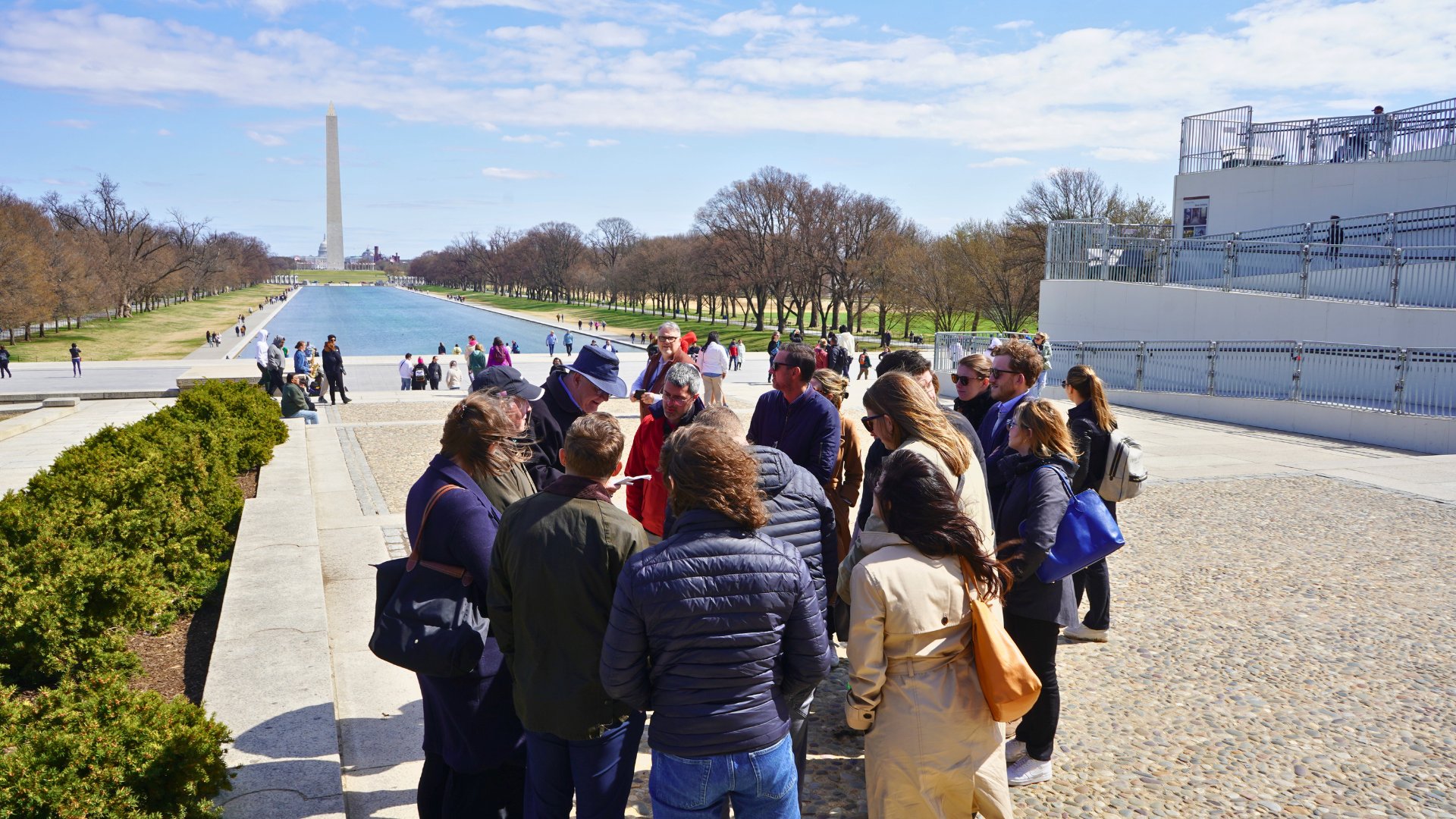
In D.C., fellows met with former White House officials, senior intelligence and law enforcement leaders, and experts from across the interagency and private sector to examine U.S. national security priorities and decision-making processes. Discussions highlighted strategic leadership, counterterrorism, and the integration of technology and intelligence in addressing global threats.
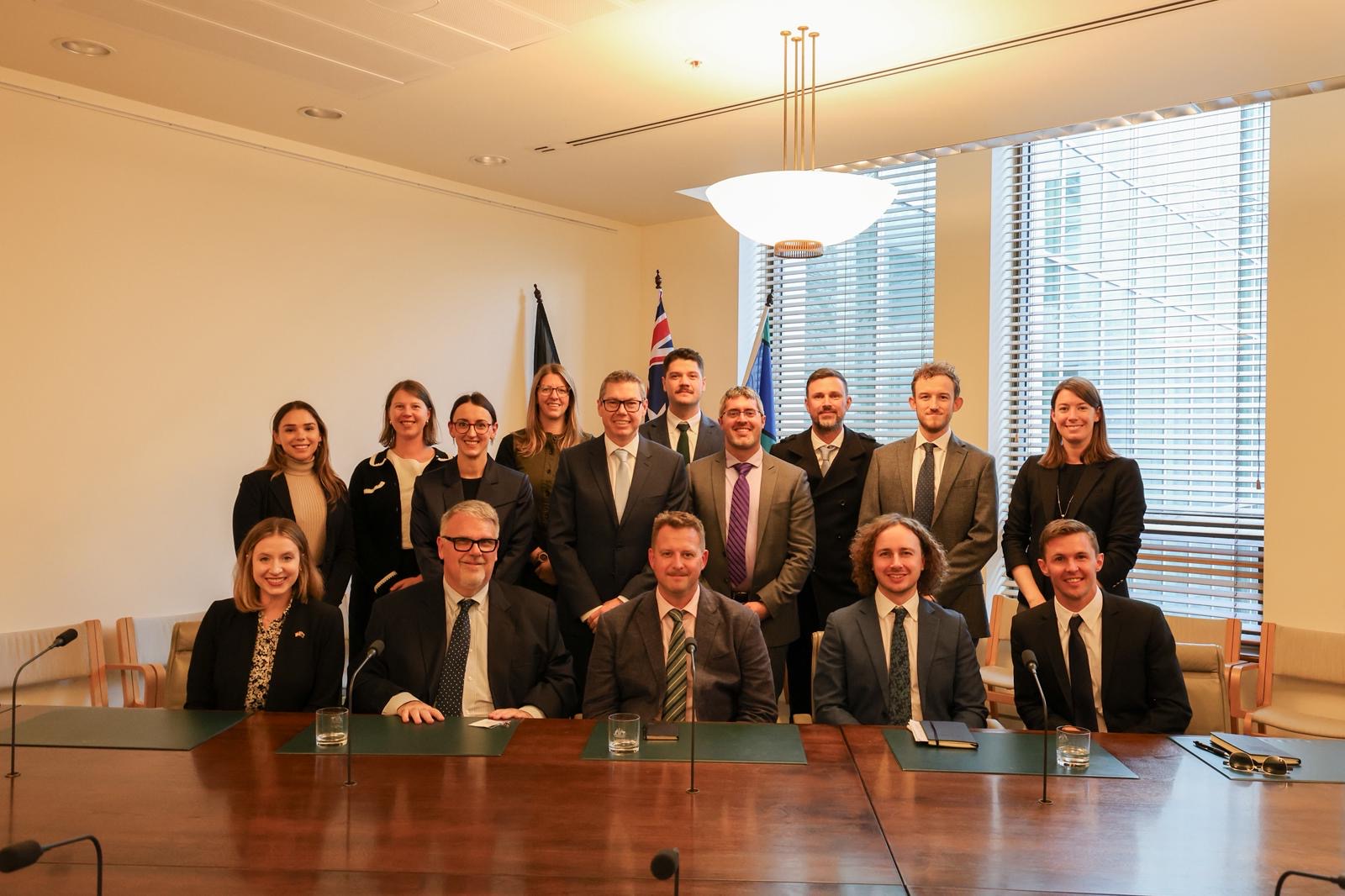
The Australia module, facilitated in partnership with the National Security College at the Australian National University, deepened the cohort’s understanding of Australia’s national security framework and regional engagement in the Indo-Pacific. Fellows heard from leaders across the Australian Security Intelligence Organisation, Department of Foreign Affairs and Trade, Australian Federal Police, and New South Wales Government, exploring issues ranging from counterterrorism and strategic competition to resilience and crisis management.

The program then traveled to Wellington, New Zealand, where fellows engaged with senior officials from the New Zealand Security Intelligence Service, the Department of the Prime Minister and Cabinet, and the New Zealand Police. Conversations focused on New Zealand’s approach to disinformation, violent extremism, and climate security within the context of the Five Eyes partnership.
Across the three modules, the 2025 fellows built enduring professional networks, shared best practices from their respective institutions, and reinforced their collective commitment to advancing democratic resilience and international security cooperation.
For further information on the fellowship or future application cycles, please visit our website or contact us at [email protected].
The McCain Institute’s Fellows are an exceptional group of global leaders, innovators, and changemakers dedicated to advancing democracy, human rights, and security worldwide. Through initiatives like the Kissinger Fellowship, the Institute highlights the groundbreaking work of its fellows, amplifying their ideas and fostering meaningful collaboration.

2024 Honorary Kissenger Fellow
The McCain Institute at Arizona State University (ASU), in collaboration with the Sasakawa Peace Foundation, hosted a pivotal event in Tokyo with McCain Institute Honorary Kissinger Fellow and Japanese Minister for Digital Transformation Kono Taro.
The event, titled “Harnessing Opportunities and Combatting Disinformation in the Digital Economy,” featured an engaging discussion with Minister Kono and The Washington Post columnist Josh Rogin, focusing on the global challenge of disinformation and the critical need to balance data security, freedom of expression, and cross-border information sharing. Minister Kono shared his insights on Data Free Flow with Trust (DFFT), a groundbreaking initiative to counter data balkanization and promote international trust in digital governance.
A panel discussion, moderated by Sasakawa Peace Foundation’s Watanabe Tsuneo, brought together Minister Kono, McCain Institute Executive Director Dr. Evelyn Farkas, and Sasakawa Peace Foundation Cybersecurity Fellow Jun Osawa to explore actionable strategies for combating disinformation and strengthening democratic resilience in the digital age.
“As the digital world transforms global geopolitics, addressing data governance and combating disinformation are essential,” said Minister Kono. The McCain Institute remains committed to supporting forward-thinking leaders like Minister Kono, who are driving critical conversations on digital transformation and global security.
In 2025, the McCain Institute’s brand visibility and communications activities reached new heights. With the Sedona Forum alone, we tapped into our media partner The Washington Post’s 2.5 million daily active users, earning $74.4 million worth of free advertising secured through this year’s media appearances.
The McCain Institute garnered over 3,200 media mentions. Our social media followings and engagement rates grew substantially across all platforms and had content go viral. Using a robust communications strategy, we are continuing the conversations of the ideas and causes Senator John McCain dedicated his life to serving.
At the core of our strategy is constructive engagement and convening of experts. By hosting forums and events that assemble subject-matter experts, we can better promote our values through solution-oriented and substantive conversations. We continue to create in-person and virtual content that makes these in-depth conversations more accessible.
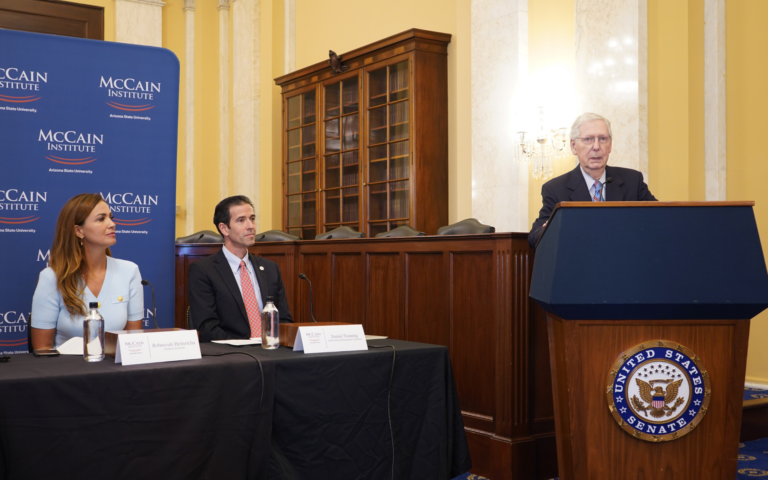
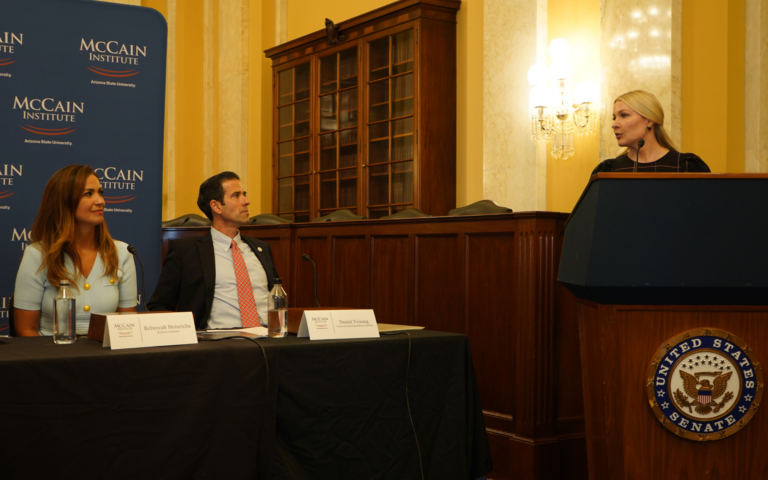
The McCain Institute hosted an event in the U.S. Senate, titled “Post-War Pathway: Principles for U.S.-Russia Relations After Ukraine.” U.S. Senator Mitch McConnell spoke at the event along with International Republican Institute (IRI) President Daniel Twining and members of the McCain Institute’s Russia Task Force.
The McCain Institute’s Russia Task Force comprises conservative national security professionals, led by Twining, who together have developed key principles for the United States’ postwar Russia strategy.
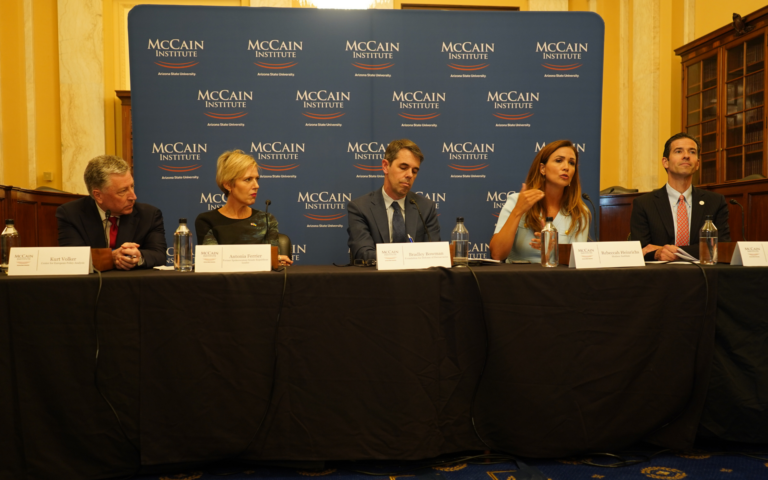
In October 2025, the McCain Institute served as official parter for the Athens Democracy Forum, and held a panel titled, “Betraying Human Rights Defenders: The Impact on Global Security,” featuring:
The conversation examined how the erosion for Human Rights Defenders is reshaping global security and economic trends, as well as what can be done to reverse course before the consequences are irreparable
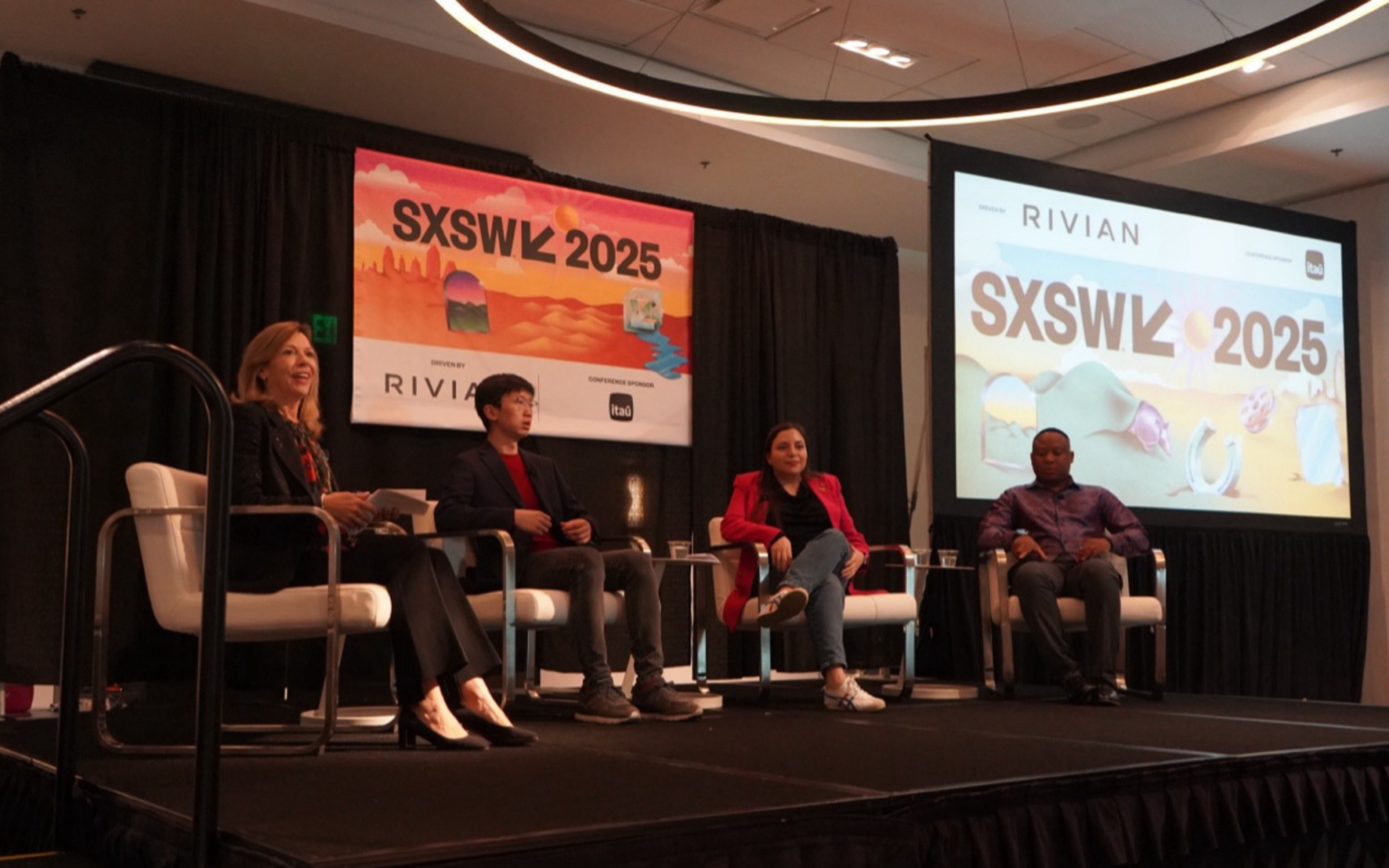
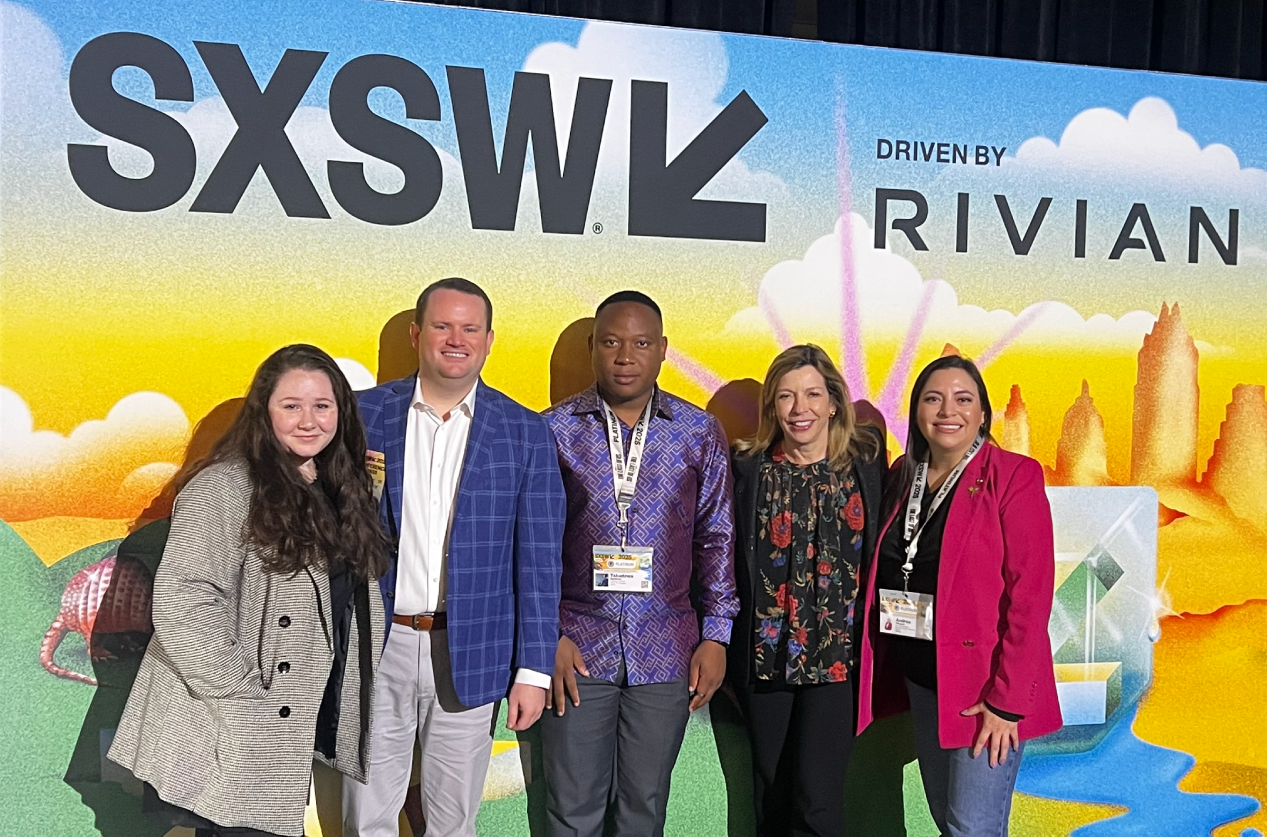
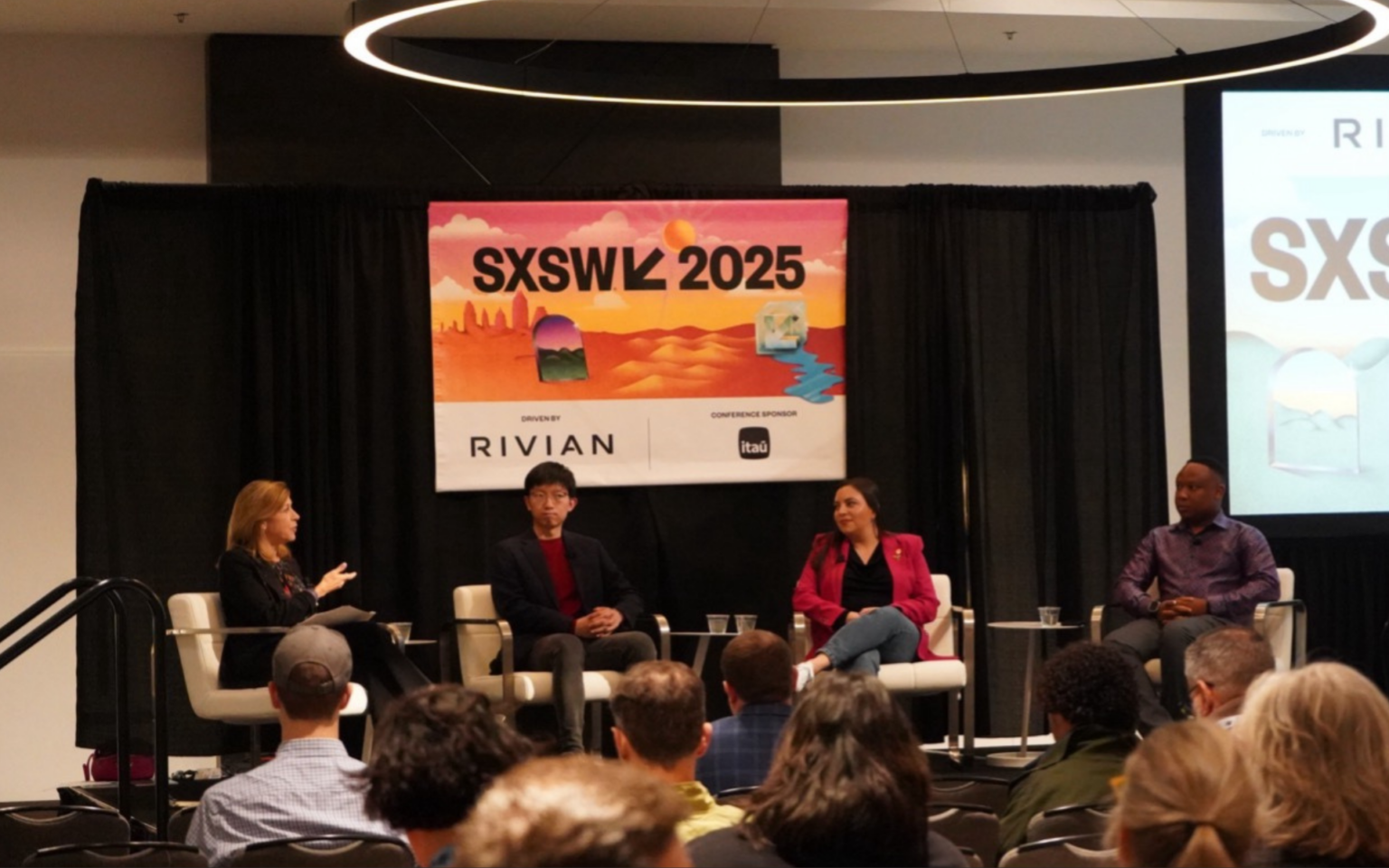
The McCain Institute hosted a panel at South by Southwest® (SXSW®) titled, “The Next Generation: Youth Leaders Fighting Authoritarianism.” The McCain Institute panel was selected out of more than 4,700 proposals submitted to SXSW® to reinforce the importance of the involvement of young people in the fight for democracy, whether that be through running for public office, the arts, social media outreach, and more.
McCain Institute Executive Director Dr. Evelyn Farkas led the discussion featuring Hong Kong Activist and Associate Fellow at the Jamestown Foundation Sunny Cheung, First Secretary of the Congress of Guatemala Andrea Villagrán, and Honorable Member of Zimbabwean Parliament Takudzwa Ngadziore.
In November 2025, the McCain Institute at Arizona State University (ASU) partnered with ASU’s Mechanics of Democracy Laboratory (MODL) to co-host an event that united more than 80 artificial intelligence (AI) experts, election officials, and civic leaders to discuss 2026 election readiness and AI’s impact on elections and government. This event was part of a two-day workshop designed to inspire, promote, and explore perspectives on principled leadership and creative AI applications and approaches with election officials from around the country.
The Economic Policy Research Center (EPRC), together with the McCain Institute at Arizona State University and the George W. Bush Institute, hosted the 8th Tbilisi International Conference on September 2-3, 2024, in Tbilisi. The conference, titled “2024: A Pivotal Year,” featured prominent policymakers and experts from Europe and the United States.

The McCain Institute’s Authors & Insights series features interviews with authors of important books on American politics, policy, and leadership that affirm the importance of character-driven leadership and America’s role in the international community. Previous authors have included the late former U.S. Secretary of State Madeline Albright, former U.S. Secretary of Defense Dr. Mark Esper, CBS News’ Major Garrett and elections expert David Becker, World Food Programme Executive Director Cindy McCain, CNN’s Jake Tapper, POLITICO National Security Reporter Alex Ward, former U.S. Ambassador to Ukraine Marie Yovanovitch, and more.
The McCain Institute is grateful to the Merrill Family Foundation for the generous support of the Authors & Insights
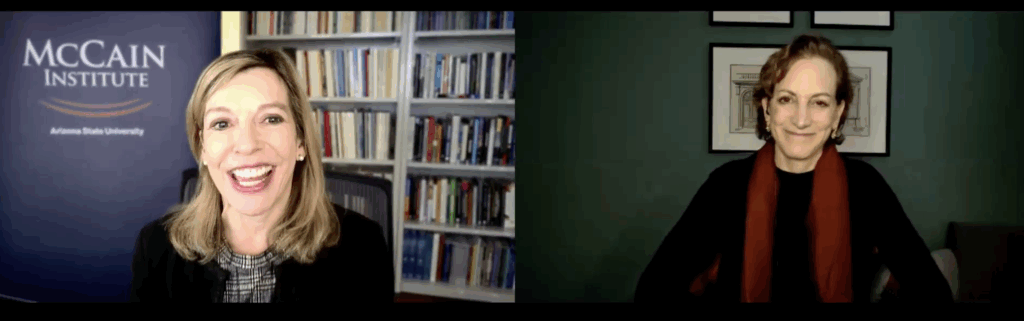
In December 2025, the McCain Institute hosted the latest installment of its Authors & Insights book talk series with American journalist and historian Anne Applebaum. McCain Institute Executive Director Dr. Evelyn Farkas interviewed Applebaum about her latest book “Autocracy Inc.” which shares an alarming account of how autocracies work together to undermine the democratic world, and how we should organize to defeat them.
The discussion between Wall Street Journal National Security Reporter Alex Ward and McCain Institute Executive Director Dr. Evelyn Farkas centered on the first years of the Biden administration’s foreign policy – beginning with National Security Advisor Jake Sullivan’s intent to pursue a foreign policy that delivers for middle-class Americans. The question-and-answer session traced the policy arc from rebuilding alliances, halting the 2021 war in Gaza, withdrawing from Afghanistan, and managing the prelude and response to Russia’s brutal full-scale invasion of Ukraine. As he did so Woodward-like in the book, Ward described members of the Biden administration applying lessons-learned from past mistakes to reset its foreign policy narrative.
Gen. (Ret.) David H. Petraeus discussed his latest book, “Conflict: The Evolution of Warfare from 1945 to Ukraine,” with Executive Director of the McCain Institute Dr. Evelyn Farkas. The discussion centered around General Petraeus’s experience leading U.S. troops in combat, including in Iraq and Afghanistan and insights on the wars in Gaza and Ukraine.
The discussion between CBS News Chief Washington Correspondent Major Garrett, national election expert David Becker, and McCain Institute Executive Director Dr. Evelyn Farkas followed the third anniversary of the Jan. 6, 2021 attack on the U.S. Capitol and focused on what actually happened in the 2020 election. They discussed the lessons learned in 2020 and the misinformation designed to con and beguile Americans into chasing phantom allegations of election crimes.